


Silver Market Deficit Widens: What Does It Mean for Investors?
The image is for illustrative purposes and was generated using artificial intelligence.
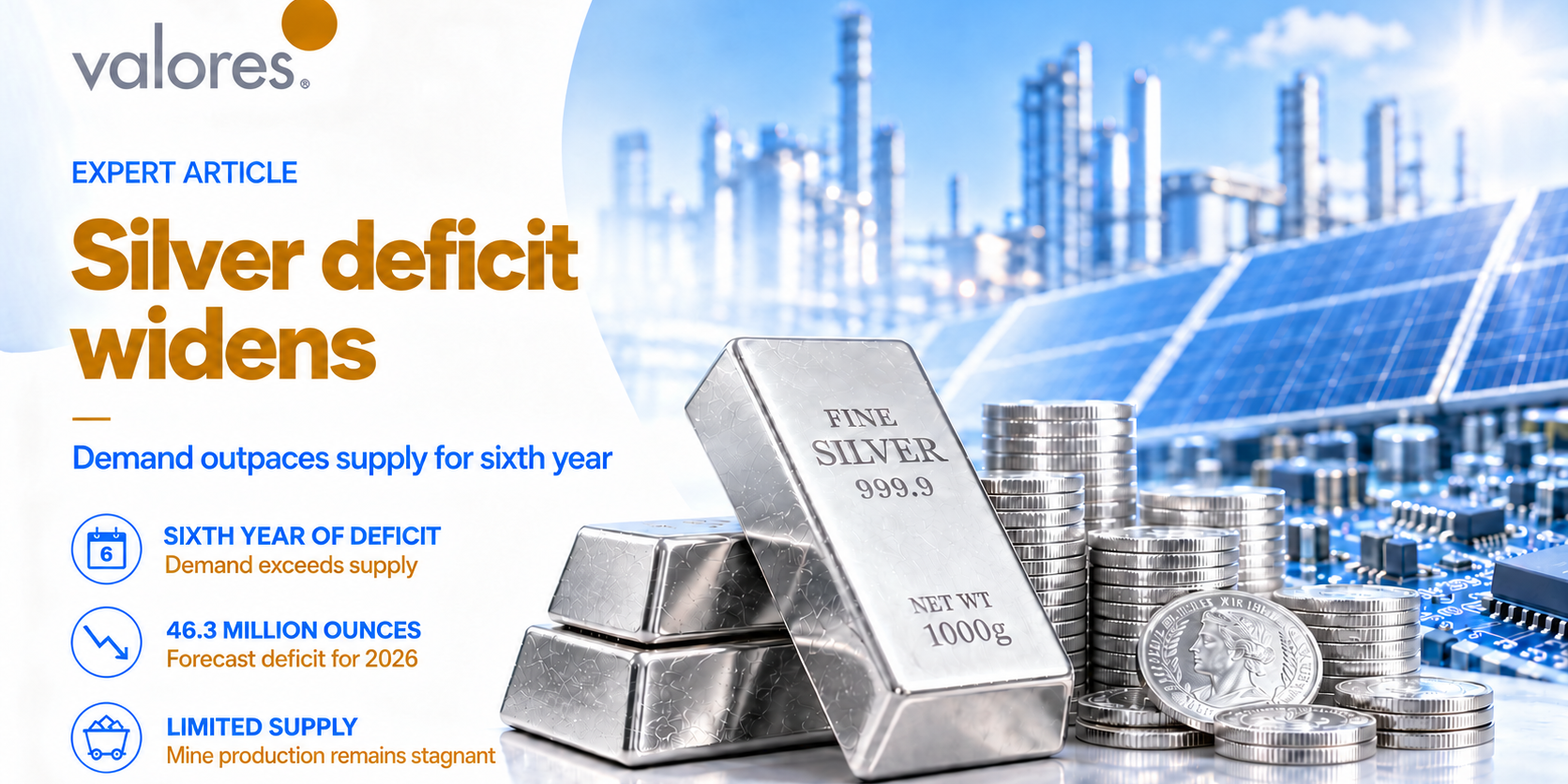
Global silver demand is expected to exceed supply for the sixth consecutive year. Forecasts for 2026 indicate that the deficit will widen further, while mine production remains virtually unchanged. Why does this matter for long-term precious metals investors?
Silver plays a dual role in the global market. It is both a precious metal that investors include in their portfolios and an important industrial raw material. As a result, demand for silver is influenced by investment decisions as well as economic activity.
The latest forecasts suggest that the silver market’s multi-year imbalance between supply and demand is set to continue.
Silver market faces a sixth consecutive annual deficit
According to the Silver Institute and research firm Metals Focus, the global silver market is expected to record its sixth consecutive annual deficit in 2026.
While the deficit amounted to approximately 40.3 million ounces in 2025, it is forecast to widen to 46.3 million ounces in 2026.
This represents an increase of approximately 15%.
This is a significant development, as it indicates that annual silver supply has been insufficient to meet total demand for several consecutive years.
Why is supply struggling to keep up with demand?
One of the main reasons is the limited ability to increase production quickly.
According to the Silver Institute’s forecasts, global silver mine production is expected to remain virtually unchanged in 2026, while total supply is projected to decline by approximately 2%.
Higher prices may encourage greater interest in expanding production, but the mining industry cannot respond overnight. It can take several years to move from mineral exploration to commercial mining operations.
As a result, silver supply is relatively inelastic in the short term. Even when market conditions change, production cannot be increased immediately.
This was also reported by Engineering News in its article on the expected widening of the silver market deficit, published on 12 October 2026.
Why does this matter for investors?
For precious metals investors, an important consideration is that silver does not depend exclusively on investment demand.
Its industrial applications mean that several sources of demand interact within the market. At the same time, limited growth in mine production raises questions about how the market will adjust if demand continues to exceed annual supply in the years ahead.
The multi-year deficit is therefore an important factor in understanding the long-term fundamentals of the silver market.
Of course, this does not mean that silver prices will rise continuously. Short-term price movements are also influenced by economic conditions, investor sentiment and financial flows.
Nevertheless, the relationship between constrained supply and diverse sources of demand is one of the reasons why silver remains a market worth watching.
Silver: A precious metal with a long-term investment outlook
The projected sixth consecutive annual deficit suggests that the silver market is facing an imbalance that cannot be resolved simply by increasing production in the short term.
For long-term investors, this is an important consideration when evaluating silver as part of a broader strategy for diversifying their assets.
When investing in precious metals, it is important to look beyond today’s price and understand the factors that may influence supply and demand over the long term.
Sources: Goldman Sachs; International Monetary Fund (IMF); Kristalina Georgieva: Navigating the Crosscurrents of a Changing World Economy, 7 October 2026.
Gold, silver or a combination of both?
Gold and silver play different roles in the precious metals market, making it worth considering how both metals could fit into a long-term savings strategy.
With the Valores Metal Account, you can buy gold and silver and gradually build your precious metals holdings according to your financial goals.
About The Author

Read also
Gold ETFs Reach Record Highs as Investors Increase Gold Exposure
Global holdings of physically backed gold ETFs have reached a record 4,250 tonnes, with investors allocating funds to gold ETFs…
Central Banks Increase Gold’s Role: No G7 Countries Among the Largest Buyers
None of the ten largest gold buyers since 2022 are G7 countries. At the same time, gold’s share of central…
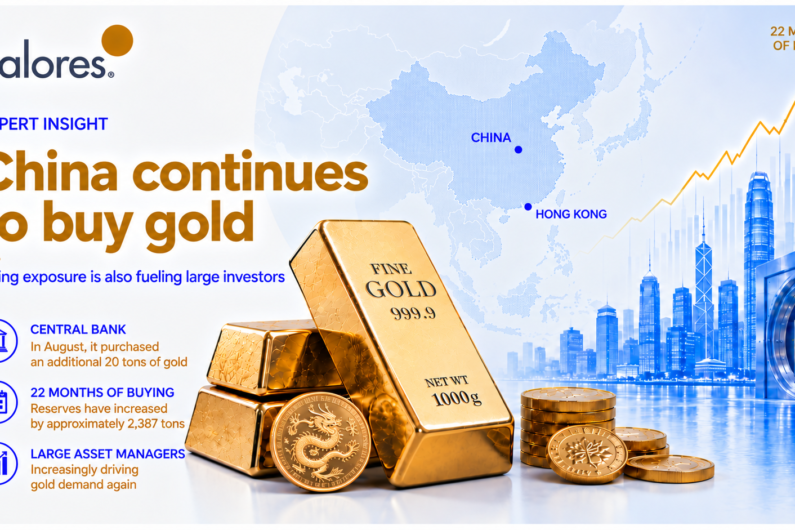
China Accelerates Gold Purchases as Major Asset Managers Increase Exposure
China’s central bank purchased another 20 tonnes of gold in August, extending its buying streak to 22 consecutive months. At…

Notice of Temporary Unavailability of the Valores Metal Account App
We would like to inform you that due to urgent technical and software upgrades, access to the Valores Metal Account…
